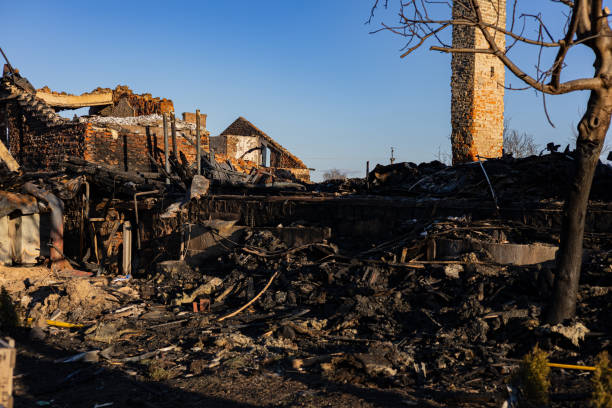
The phrase "Fire Damage Removal" gets used as a catch-all in Dayton, applied to everything from a landlord wiping down walls with a cleaning cloth to a full IICRC-certified remediation project. Understanding what the complete process actually entails helps Dayton property owners hold contractors accountable and understand why cut-rate bids almost always produce incomplete results that come back as costly problems later.
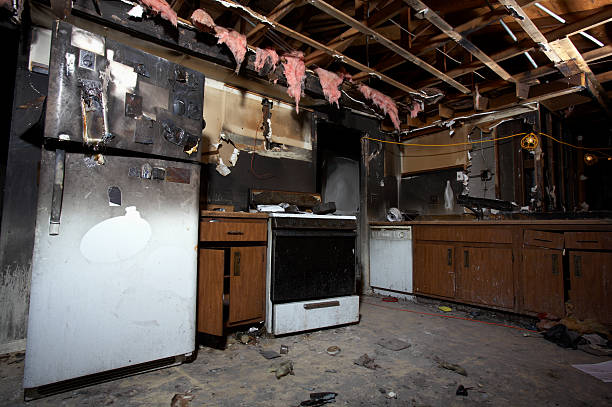
Fire damage extends well beyond what the eye registers at first glance. The visible scorching around an ignition point represents only a fraction of the total affected area. Smoke travels under pressure and heat differential. It moves through wall cavities, into HVAC ductwork, above drop ceilings, under raised flooring, and through any opening in the building envelope. A fire contained to the kitchen can deposit smoke residue in every bedroom in the house because the HVAC system was running during or after the fire. In Dayton, where homes range from older construction with loose wall assemblies to newer builds with tightly insulated envelopes, the pattern of smoke migration varies significantly between properties. Thorough Fire Damage Removal requires mapping that migration pattern before any cleaning begins.
The 48-Hour Window
The first two days after a fire are when the most consequential decisions get made. Soot begins chemically bonding to surfaces within hours. Smoke residue on porous materials like drywall, wood framing, and insulation becomes progressively harder to remove the longer it sits. Protein soot from cooking fires produces a thin, almost invisible film that is notoriously difficult to detect and can permanently etch glass, chrome, and porcelain surfaces if left longer than 24 hours. Moisture from firefighting water creates conditions for mold growth within 24 to 48 hours if wet materials are not extracted and dried immediately. Acting within the 48-hour window in Dayton is not a sales pitch designed to create urgency. It is a documented reality of how fire damage compounds.
IICRC-certified technicians operating in Dayton follow the S700 standard for fire and smoke damage restoration. This standard specifies how damage is categorized, how contamination levels are assessed, what cleaning methods are appropriate for each surface and material type, how documentation is formatted, and what testing confirms that restoration is complete. A contractor without IICRC certification has no obligation to follow these standards and typically does not. The difference in outcomes is visible in re-inspection results, insurance documentation, and whether the home is genuinely habitable after the job is marked complete.
Insurance Documentation
Insurance carriers in TX require specific documentation formats to process fire damage claims. The claim file needs a written scope of work, itemized damage inventories, pre- and post-treatment photographs, moisture readings, and signed clearance documentation. Our Dayton team produces this documentation as a standard deliverable, not an optional add-on. Homeowners who hire uncertified contractors and then attempt to file claims frequently discover that their adjuster cannot approve the claim without documentation the contractor never produced. Starting over with a certified company at that point adds both cost and time to an already difficult situation.
Contents evaluation is the aspect of Fire Damage Removal most often handled inadequately. Contents include everything inside the structure: furniture, clothing, electronics, appliances, books, documents, photographs, and personal items of every kind. Each category requires its own assessment and treatment approach. Electronics exposed to smoke residue require professional decontamination before they can be safely powered on. Documents can sometimes be restored with freeze-drying and document recovery techniques. Clothing and soft goods are assessed for smoke and odor contamination and treated with specialized cleaning methods. Our Dayton contents team produces a written inventory distinguishing items that are restorable from those that are not, which becomes the basis for replacement claims on non-salvageable items.
What Completion Actually Looks Like
Complete Fire Damage Removal in Dayton means the property passes air quality testing, all affected surfaces return negative on soot swab tests, moisture readings in all structural materials fall within acceptable ranges, odor-causing compounds have been neutralized at the molecular level, and the full documentation package has been assembled and delivered. When those conditions are met, the job is complete. Until all of them are met, the job is in progress. This is the standard Protect Fire Tail holds every Dayton project to, and it is the reason our insurance partners and adjusters in TX refer clients to us by name.